.avif)
What It's Like Getting Sued by Caterpillar | Dick Zheng, Bluelight Machines Co-Founder & CEO

Tristan Wilson
The Edge Podcast — with Dick Zhang, Co-Founder & CEO of Bluelight Machines
What It's Like Getting Sued by Caterpillar | Dick Zhang, CEO of Bluelight Machines
On June 10, Caterpillar filed a complaint in federal court in Delaware alleging that Bluelight Machines - a 13-person startup out of Pittsburgh that turns rollers and articulated trucks you already own into autonomous machines - infringes five of its patents. Caterpillar wants a permanent halt to sales, triple damages, and a jury trial. Equipment World covered the filing here.
Full disclosure: Dick Zhang, Bluelight's CEO and co-founder, is my friend, and I'm an investor in his company. I'm not neutral and I'm not pretending to be.
The headline is what got you here. The story is how he builds - and what it says about what happens when small teams that ship collide with giants that litigate.
It's not about kombucha and bean bags
Dick and I have spent a lot of hours talking about startups, and we've landed on the same simple view. Startup culture isn't the kombucha tap and the bean bags. It's three questions:
Does the product work? Are people using it? Are they getting value?
If the answer is no, nothing else matters for your business. Not your funding, not your headcount, not your press. And the hardest thing in the world as a founder is the intellectual honesty to look at those three questions and say, out loud: it's not working, we need to change things. Most founders quietly look away - your identity is fused to the thing.
Dick does it with excellence. Even now - over a billion square feet rolled autonomously, 300+ sites across five continents, 60,000 real-world safety stops and zero injuries - he'll tell you most days he doesn't feel Bluelight has fully arrived. His bar: if we disappeared tomorrow, would it be catastrophic for the customer? He learned the cost of the alternative the hard way. In his first company he spent years not saying the honest thing out loud, and the stress spiral took him from 200 to 307 pounds, living behind a plywood wall in a warehouse. He's lived the dishonest version. He's not going back.
Ship today. Not tomorrow. Today.
The other half of Dick's operating system: what can we ship today that fixes a problem for a customer? Not next week. Not after a month of polishing. Right now.
He describes himself, with characteristic candor, as "borderline obsessive, neurotic, annoying" about it. You can take a month to build something perfectly, or take two and a half days to get 75% of it done and find out whether it was worth building at all. So Bluelight runs on daily bets — a thousand bets on the next eight to twelve hours, until you've done something wonderful for somebody. And it isn't delegated philosophy: Dick is regularly coding late into the night alongside his own engineers, after spending three-quarters of his week on jobsites. The jobsite doesn't care about your pitch deck.
He knows exactly what that costs. Early on, Bluelight put a prototype autonomous 745 into a live haul on a data-center job - real production penalties, a veteran operator named Chukchi loading trucks in two and a half scoops. The system bugged out mid-load, in the pinch point of the entire haul. The restart took maybe 90 seconds; five loaded 745s stacked up behind it, and Chukchi stared — Dick's words — "laser beams into my soul." It took years to win that trust back.
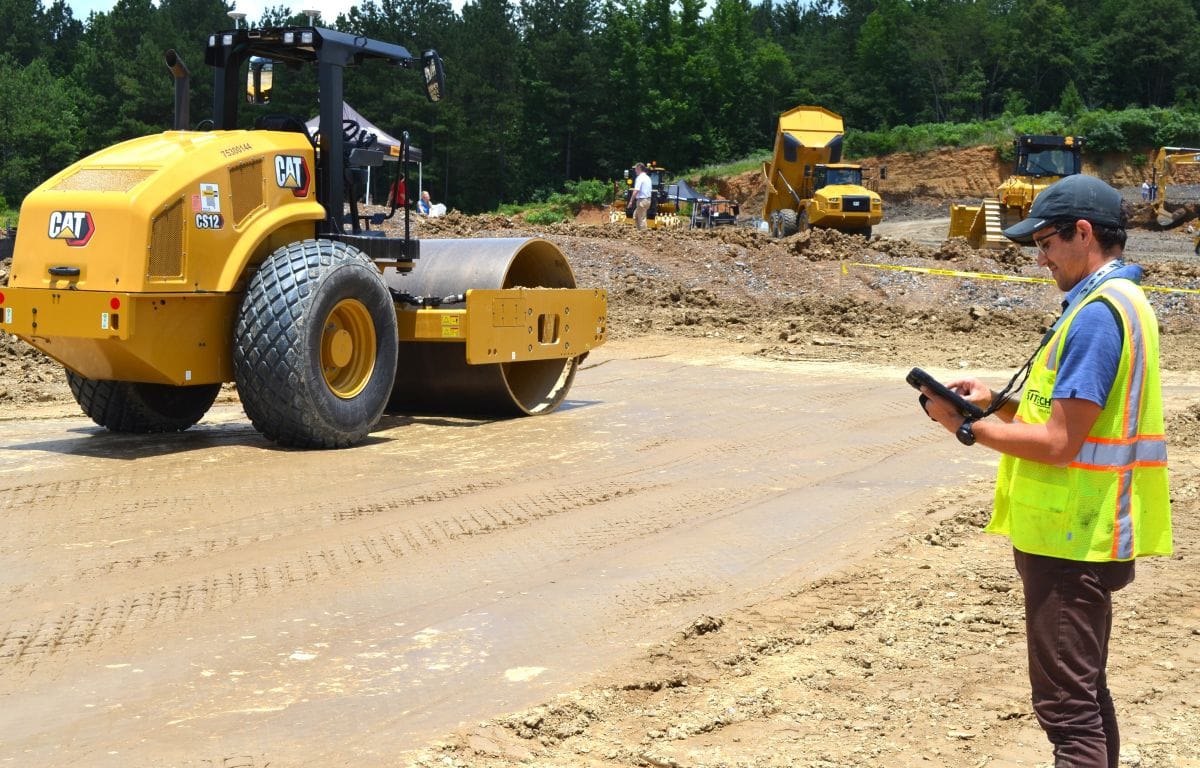
Photo Credit: Bluelight Machines
Funded by the people it serves
Bluelight skipped the classic venture path. Roughly half its capital comes from customers - contractors who run equipment for a living. More than a third comes from heavy-equipment dealers, the people closest to the machine economics, who saw a two-hour, tens-of-thousands install on a machine a contractor already owns - not the hundreds of thousands autonomy is assumed to cost - and understood it instantly. Cat dealers sell Bluelight kits.
The feedback loop and the cap table are the same people. The ones who build the jobsites, sell the iron, and run the machines are voting for Bluelight with their wallets - which means the three questions are answering themselves.
And the operators - the people with the most right to be skeptical - deserve a plain word here. Running a roller well is skilled work; people have built honest careers and fed families from that seat, and nothing about autonomy changes what that work was worth. Bluelight's bet isn't that those people are replaceable. It's that they're promotable: the good ones are graduating into "autonomous foreman" roles, running multiple machines from a pickup with a tablet, at a different pay scale, with new clout on the site. The economics run in their favor, too. When moving dirt drops from $3 a yard toward $1.50, jobs that didn't pencil five years ago suddenly do - cheaper work has always meant more work, not less, and the operator who can run six machines becomes more valuable, not less.
The lawsuit
Now run the complaint back through all of that.
Before I say anything critical, you should know where I come from on this brand. I used to have a CAT license plate on the front of my truck. At Barriere, we ran almost all CAT iron, and our relationship with Louisiana CAT was one of the best we had. Nobody raised the way I was raised is anti-Caterpillar - which is exactly why the distinction I'm about to draw matters. CAT corporate is not your Cat dealer. Dealer principals are independent businesspeople who live and die by whether their contractor customers get work done, and plenty of them are Bluelight's backers and sellers. The complaint came from corporate.
His position is blunt - "we think it's a no-merits set of allegations" - and a court will decide it, over what could be two or three years. He's eager for that: it matters to him that Bluelight is "clean and straight in the eyes of the law," the company is overcapitalized and funded for the fight, and his message to customers is the same radical honesty as everything else - if this changes your calculus, walk away, zero questions asked.
Caterpillar has known about Bluelight for a couple years. It filed now, while developing its own autonomous roller products that, as far as anyone can tell, aren't on the market yet. A company with a winning product in the field doesn't reach for patent litigation against 13 people - it reaches for its roadmap. Giants sue when they can't ship. The lawsuit tells you less about Bluelight than it does about the state of Caterpillar's autonomy program. So does the target: Caterpillar is suing a product its own dealers are funding. And there's a reframe worth holding onto - nobody files a federal complaint against a company that doesn't matter. In that sense this isn't just a threat. It's a tax: the tax you pay for mattering.
Dick, more gracious than I'd be: "I obviously don't like it. I don't agree with it. But I get it." History offers incumbents a better playbook - Mercedes was an early Tesla shareholder, Microsoft still backs OpenAI while competing with it - but that's Caterpillar's call.
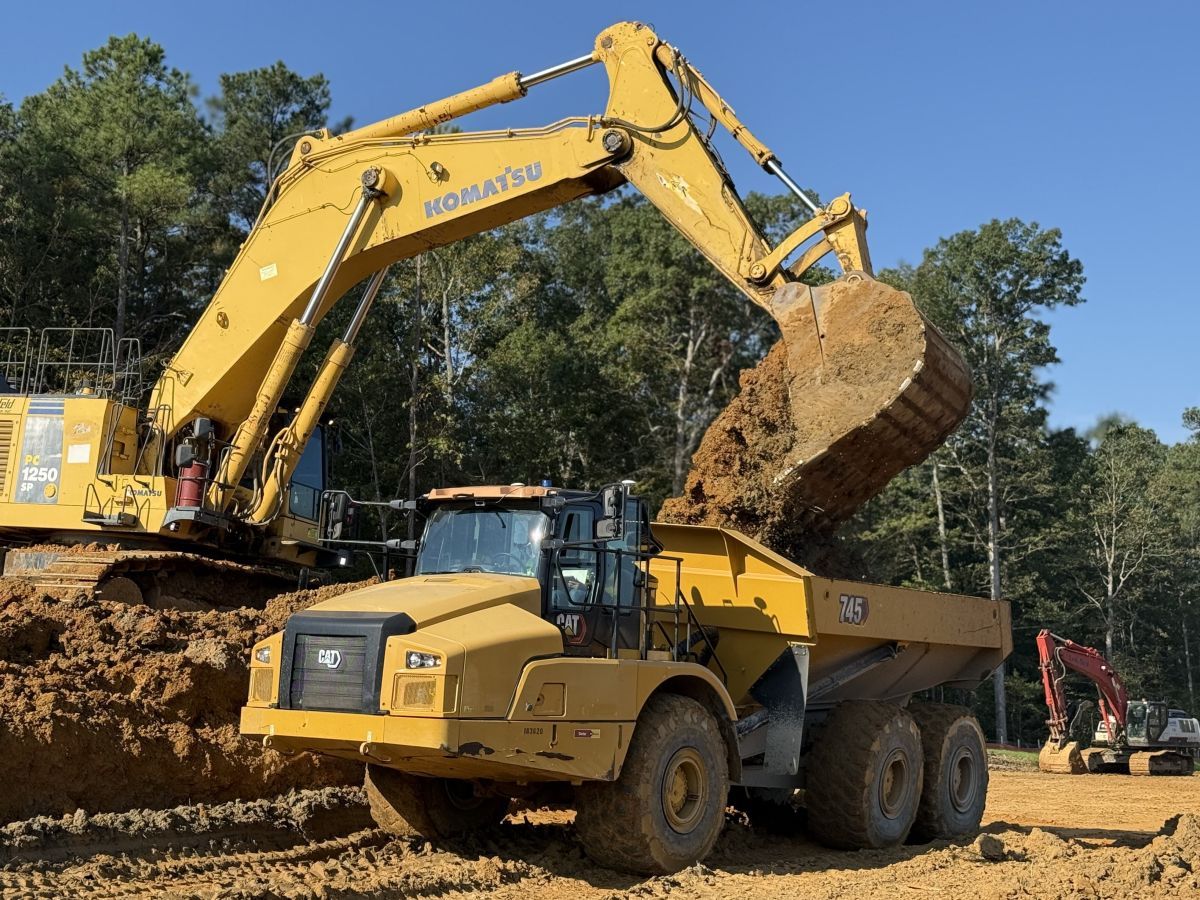
Photo Credit: Bluelight Machines
This is about more than one lawsuit
Step back far enough and this stops being a story about two companies. This country has an enormous backlog of infrastructure that needs to be rebuilt - roads, bridges, sites, the physical foundation everything else runs on - and the cost of building has climbed for decades while the workforce that does it ages out. We do not close that gap with the same tools and the same cost structure. We close it by putting the latest technology in the hands of the people who actually do the work, which is precisely what accessible autonomy is: not a robot replacing a crew, but a retrofit kit - installed in two hours, at a fraction of the cost of a new machine - that lets an American contractor and an American operator move twice the dirt.
That's why fair competition matters here beyond the principle of it. Competition is the mechanism that gets this technology onto jobsites at a price contractors can actually pay. Patents exist to protect invention - they should never become a tool for protecting incumbency from competition, because the cost of that isn't borne by a startup in Pittsburgh. It's borne by every taxpayer funding a road costing more than it needs to.
And make no mistake about the alternative: this technology is getting built either way. The only question is where, and by whom. Either American companies lead the autonomy transition in construction, or we cede it to China's equipment industry and spend the next generation buying it back. I know which outcome I'm working toward. That's why I believe in Dick, in Bluelight, and in the people like them who spend their weeks on jobsites making our industry better - not in those who'd rather slow that work down in a courtroom.
Finally, a lesson from history. It should have been Hilton that figured out home rentals - it was Airbnb. It should have been Lockheed or Boeing that made rockets cheap - it was SpaceX. It should have been Ford or GM that led electric vehicles - it was Tesla. Kodak actually invented the digital camera, then shelved it to protect film. In every case the incumbent had every advantage - the brand, the capital, the engineers, the distribution - and the breakthrough came from outside anyway. That's not an accident of history; it's the structure of it. Incumbents are built to protect the present, and a startup has no present to protect. It should be Caterpillar delivering accessible autonomy to the everyday contractor. The lawsuit is how you know it probably won't be.
Giants can fall
I'll admit this one is personal. At Edgevanta, we're building for contractors that we believe legacy construction software has taken for granted for twenty years - smaller team, faster shipping, closer to the customer. So when I watch a hundred-year-old giant respond to 13 people with a federal complaint instead of a better product, I don't just see Dick's fight. I see a lesson for everyone in this industry - and it is not about big versus small, or old versus new. Some of the best businesses in construction are fifty-year-old, third-generation contractors, and they've stayed the best precisely by staying close to the work. The line that matters runs somewhere else: between companies that earn their position every day, and companies that defend it in a courtroom.
David didn't pick this fight. But I respect Dick's work ethic and his first-principles thinking, and I've watched how Bluelight builds - on the jobsite, funded by the people it serves, honest to the point of discomfort, shipping every day. I'd take those odds.
Watch the full episode above. We also get into why the excavator operator is the last person autonomy should come for, the hardest firings of Dick's career, and how a guy who once had Domino's on speed dial became a half-Ironman athlete who intends, quite literally, to outwork his competition.
Follow the story:
Dick writes an honest, good-and-the-bad newsletter about building Bluelight on LinkedIn — including an open letter to customers about what it's like to be sued. You can find Bluelight at bluelightmachines.com — request a demo at the bottom of the page and Dick sees every single one himself.
Sources: Equipment World: Caterpillar Sues Bluelight Over Autonomy Kits for Rollers, Articulated Trucks
.avif)

.svg)