.avif)
The $52 Million Note

Tristan Wilson
A true story about a taxiway, a footnote, and the most expensive skim in Louisiana history. Names withheld to protect the human.
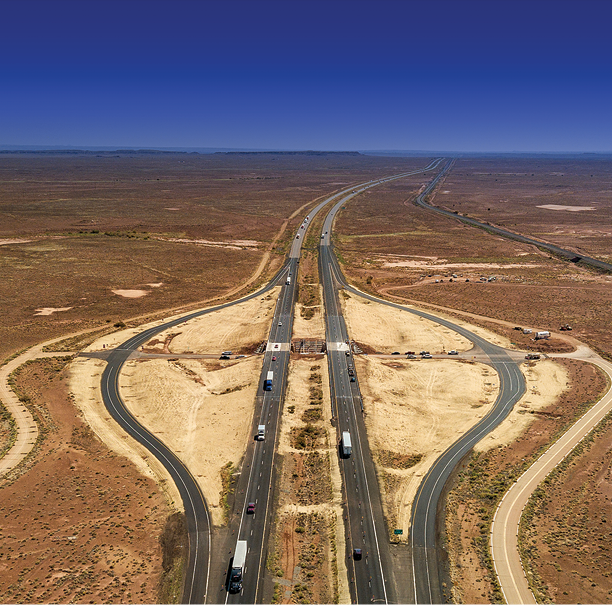
A few years ago, we were bidding a big airport job at the New Orleans airport - a taxiway extension. Full-depth reconstruction, concrete paving, serious underground work.
While reviewing the bid forms for the asphalt work, I saw something weird. One of the alternates gave the owner the option to reconstruct an extra section of runway. Fine. Normal. But there was a note on the bid form: any item appearing in both the base bid and the alternate had to carry matching unit prices. Mismatch, and your bid was disqualified.
I called our Chief Estimator, who was running the civil side. This is the man who taught me how to estimate, and his entire method fits in one sentence: read every single note, every document, every time. I asked if he'd seen it.
"Oh yeah. That's a weird one."
That was the whole conversation. Estimators are not paid by the word. We worked up the asphalt price with matching unit prices and sent it to him two days before the bid.
Bid Day
On bid day I was riding a job with a Superintendent, so I called in to hear the results read aloud.
Bidder 1: $44 million.
Bidder 2: $47 million.
Bidder 3 (us): $52 million.
We got smoked. I hung up the phone went about my day, because there is no productive way to think about being $8 million high.
The next day, we got the call. Bidders 1 and 2 were disqualified. Non-responsive. They missed the note.
Technically, their electrical sub missed it - the same sub for both of them, because that's how this business works. Electricians are famous for sending quotes at the last possible minute (with the likely exception of two loyal readers and friends in Nashville - Rob and David, you know who you are 😊), and this one priced the alternate's electrical items higher than the base. Both estimating teams plugged his numbers straight into the bid form exactly as received. Two bids, dead on arrival.
Our Chief Estimator didn't transcribe. He remembered the note and matched the electrical prices the way the form required.
We were awarded a $52 million job over a footnote. The other contractors could do nothing but watch us build it.

The Part That Should Bother You
The low bidder was a shop full of licensed PEs - first class firm, smart people, folks legally allowed to stamp drawings. They knew more engineering than anyone in that letting, including us.
They didn't lose on what they knew. They lost on what they didn't notice.
And before anyone feels superior about it: it could have been us. It was 10 p.m. before bid day, the sub quotes were rolling in late, and everyone was doing what they'd done on the last hundred bid forms. That's the trap. Being smart doesn't protect you from being human. If anything it makes it worse, because smart people skim with confidence.
You can't fix that with talent - talent is who missed the note. You can't fix it with effort alone either, because effort runs out at exactly the hour the electrical quote shows up. You fix it with a system that reads everything, every time, and doesn't care what time it is.
That story is the seed that became our Bid Forms and Signatures Agent at Edgevanta. Run the bid package through it and it extracts the requirements - the acknowledgments, the signatures, the weird notes like this one - trained on thousands of civil bid packages. It doesn't replace judgment and it doesn't replace reading the specs. It's a third set of eyes that never gets tired and never assumes this form is like the last one.
If Bidders 1 and 2 had that check in their process, they would have won, and you'd be reading a much worse story.

Then Go Win the Job
One sentence of text was worth $44 million to the low bidder that day. The check that would have caught it costs roughly nothing. That's the whole trade, and you only have to be on the wrong side of it once.
Read every note. Every document. Every time. Build human redundancy. And put something behind you that does the same - because the next weird note is already sitting in a bid form on somebody's desk, and it doesn't care how smart the room is.
It only cares who noticed. Thanks for reading this week.
.avif)

.svg)