.avif)
The $13 Million Silt Fence

Tristan Wilson
Every market and every job is different. This is how I've seen it work, not a perfect formula. Your mileage may vary. Take what's useful and leave the rest.
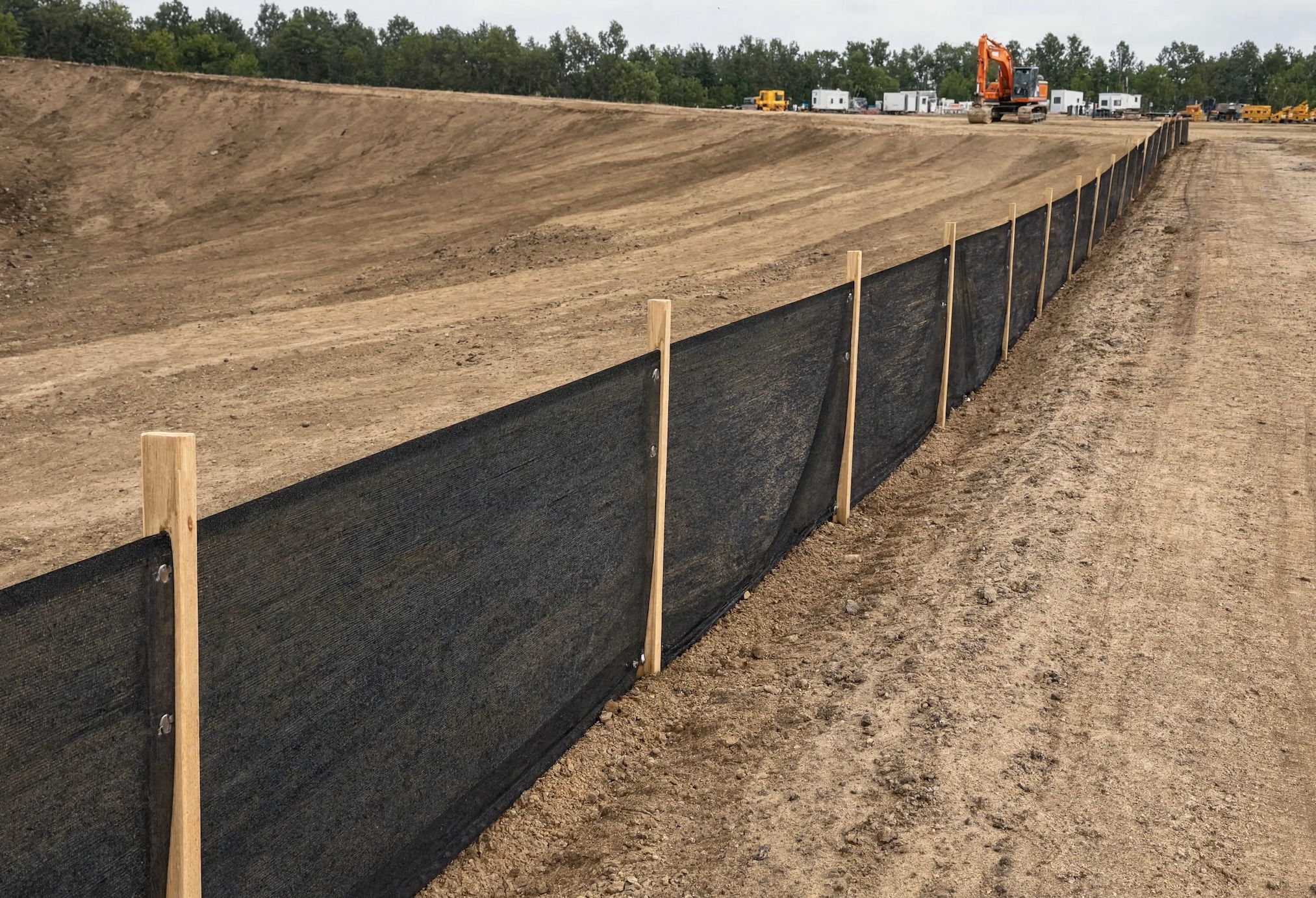
We won a $13 million job because of silt fence.
Not because we were smarter than the room. Not because we had information nobody else could get. We won because every other bidder copied the engineer's quantity for temporary silt fence straight off the table, and we measured it ourselves off the plans. The number was wrong - wrong in a direction that mattered. That one item swung the bid into double-digit gross profit on a job that had no business getting there.
But the fence isn't the lesson. The fence is just the part you can see. We didn't win on one lucky line item - we won because we took everything off, and the fence is simply where the gap happened to surface that day. On another job it's the dirt. On the next it's the patching. The discipline is the edge; the fence is the receipt.
Here's the whole argument in one line: the cheapest edge left in construction isn't information, it's effort - and almost nobody spends it all the way. The plans are the same for everyone. The specs are the same for everyone. The only thing that differs from bidder to bidder is how much homework each one actually did. That gap is enormous, and it's free.
I'm talking mostly about unit-price work - DOT and public jobs where the owner hands you the line items and the estimated quantities and you price each one. That's where homework pays most directly, because you get paid on what gets built, not on what the table guessed. The same discipline helps on lump-sum too. But unit-price is where it's life or death.
One thing to get straight before we start, because the rest of the essay turns on it. Doing the takeoff is table stakes - it's the price of admission, and anyone willing to spend the hours can do it. What actually wins the close ones is the judgment you can only exercise once the takeoff is done: how hard to push, who you're up against, where to leave yourself exposed. Effort gets you to the table. Taste wins the hand. Most contractors never get past the first part, so they never find out the second part exists.
Three parts, in order. Do the takeoff. Use the takeoff. Know how hard to push.
Part One: Do the Takeoff
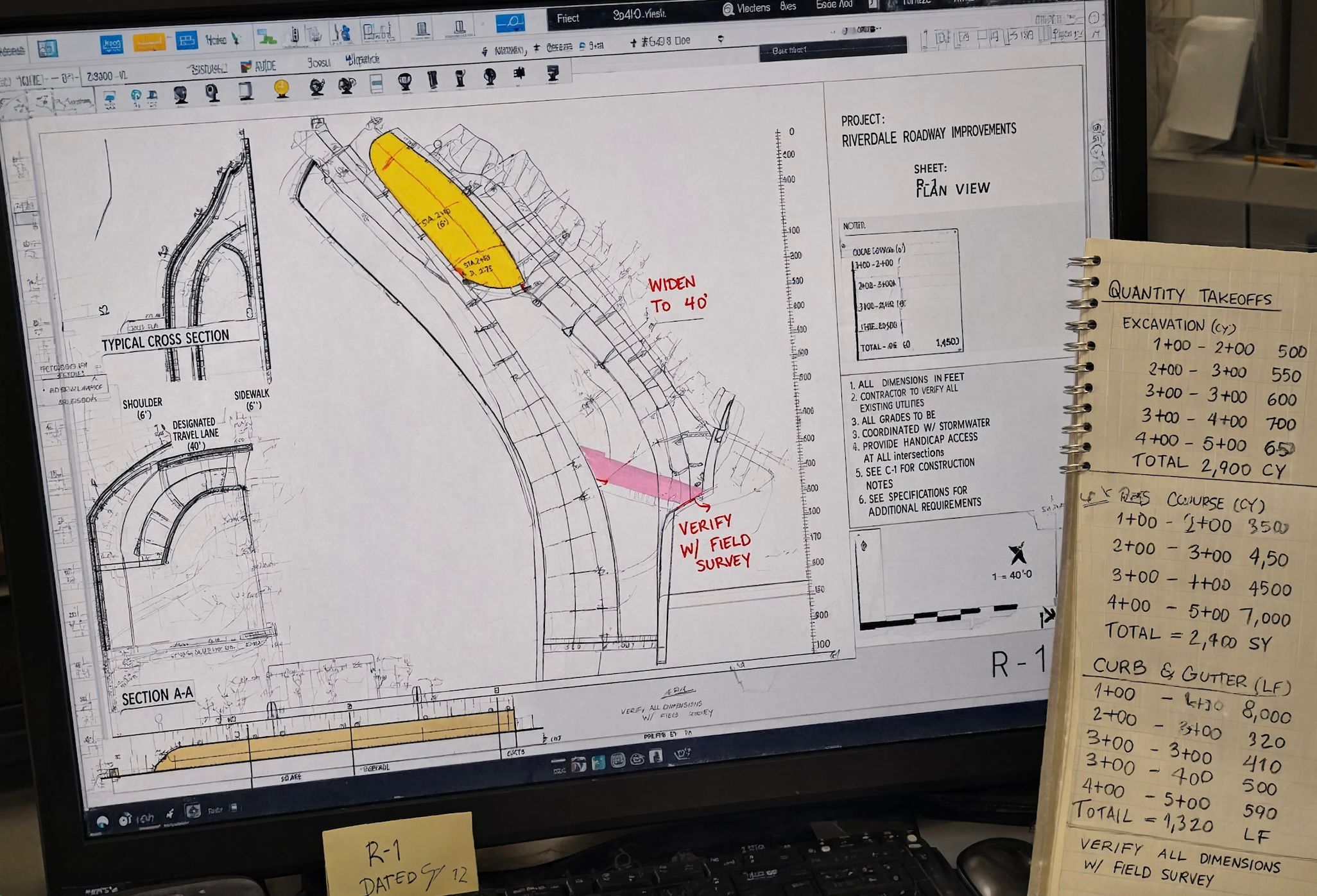
You can tell in five minutes whether somebody did their job. Pull up the engineer’s quantity against the takeoff quantity in B2W, HCSS, InEight - whatever you use - and look at the spread.
If there are more than fifty items and every one matches exactly, one of two things is true. Either that's the most accurate engineer who ever lived, or somebody didn't do their homework. It's the second one. It's almost always the second one.
A real takeoff disagrees with the engineer. Not everywhere, not to be difficult - but the work doesn't match the table, because the table was built by someone who cannot see things the trained contractor sees. When your estimator actually measures the work and uses their intuition, the numbers move. Red numbers, green numbers. That spread is the sound of somebody doing their job. A takeoff with no spread isn't a takeoff. It's a transcription.
So here's the play, and I won't dress it up: take every single thing off. Drainage. Patching. Pier cap concrete. Beam lengths. Rebar. Striping. Barricades. Signs. And the dirt - especially the dirt nobody else is watching. Count the boxes against the plan view. Run the pier caps in cubic yards off the details, not the summary. On the roadway, find where you can cut the shoulders back and reuse the material instead of hauling it in, what the real patching number is instead of the allowance, how to stage the work to stay off temporary striping you don't actually need. Break items down by area and phase so they are quantified and assigned production rates the way they will actually be built.
The takeoff isn't a counting exercise. It's where you build the job in your head before you build an inch of it in the field, and every place the work differs from the table is a place you find money.
The best estimators I ever sat next to measured every item, then kept going when everyone around them thought they were done. People will think you're crazy for it. Let them. You'll keep kicking their tail.
Part Two: Use the Takeoff
Here's what astonishes me more than the people who skip the takeoff: the people who do all of it - walk the site, measure every item, build a beautiful takeoff - and then never put their own quantities in the bid file. They price the job off the engineer's table anyway. That's scouting the other team all week and throwing out the game plan at kickoff.
If you're going to do the takeoff, finish it. Put your quantities in the file. Price each item for what that work is actually worth to perform. Then set your prices so your bid total reflects what you genuinely believe you'll get paid when the job is built - not what the engineer's table says on bid day. On unit-price work your real revenue is your price times the actual quantity in the field, not the estimated one. Information you don't act on is worthless.
Here's what it costs you when you don't. Say your major items come in 10% under the plan quantity, and you bid the plan quantity anyway. You just parked profit in items you won't fully build. You nail your productions - hit every rate dead on - and your 6% margin still walks in at 4.5%, because the quantities you priced the profit into never showed up. You didn't lose that point and a half in the field. You lost it on bid day, in the file, before a truck dumped a load.
This isn't gaming anyone. The owner wrote a unit-price contract and asked every bidder to price the line items. The low responsible number still wins. You're just reading the work more accurately than the next guy or gal - which is exactly what the contract rewards.
And that structure exists because it's good for the owner, not just for the contractor. Unit prices give owners room to make field changes on the fly - "add some here," or "go two feet wider there" based on field conditions - and just pay the agreed price for the extra quantity, instead of grinding through a long, drawn-out change order for every tiny adjustment. It keeps the job moving, it keeps the relationship clean, and it reduces bureaucratic headaches.
Part Three: Know How Hard to Push
This is where the judgment lives, and where good estimators separate from reckless ones. It comes down to three things: the downside if you're wrong, the field you're bidding against, and the line you don't cross.
The downside. I once watched us do everything that we thought was right and still leave a pile of money on the table. We had a real edge on a specialty item - we knew from our homework we wouldn't do anywhere near the quantity shown, and nobody else had caught it. We needed work badly. So we priced that item low and bid the rest of the job razor-thin on top of it, walking in with almost no margin anywhere. We won. We also gave away a fortune - because our competitors weren't willing to take that risk. The rest of the field bid it straight up. We could have carried real margin everywhere else and still been low. We didn't get beat. We beat ourselves by pricing for a risk appetite nobody else in the room shared.
The risk. Moving money is taking risk, and risk isn't free. Before you push, ask: what happens if you're wrong? If you bid an item light because you're sure the quantity won't materialize, and it does - is it a job-killer? A company-killer? How confident are you, really? The answers should change how hard you push. And the big pricing-risk assumptions shouldn't live in one estimator's head. Get them checked by more than one set of eyes before the number goes in the box.
The field. The other half of how hard to push is who you're pushing against. That specialty-item job is one of a hundred reasons to review past bid tabs. The tabs are the record of how your market actually behaves - who bids aggressively, who plays it straight, where the field lands on work like this. Read enough of them and we'd have known going in that nobody else was going to push that item, and we'd have kept our margin. We were guessing at the field's appetite. The history was sitting right there. If you're going to take risk, there has to be commensurate reward on the other side - and you can only size that reward if you know the owner and know the bidders.
The line. There's a line you hold, but it's higher than people think. If the bid package is genuinely whacked - so far off it doesn't reflect the job that's going to get built - you say something. You bring it to the owner. That's the right thing, and it's how you stay a contractor people want to keep hiring. But that's a high bar, not an every-item reflex. You are not the quantity police. Plenty of quantities that look wrong are wrong on purpose - owners pad and hold items to protect themselves against an overrun, and that's their call. And even when you flag a genuine problem, the form often comes back unchanged. You raised it. They left it. Now you compete on the form as written, same as everybody.
Past that line, sequence the job the way you intend to build it and price it to win on your own means and methods. As long as you're meeting the bidding requirements, knowing the work better than the next person is exactly what you're supposed to capitalize on.
When It's Done Right, You Tip Your Hat
The flip side of overplaying your hand is playing it perfectly - and I've been on the losing end of that too.
We were bidding a concrete patching job, the water became muddied: different removal items, different pour-back items, a spread of depths, chopped up across the bid form. Most of us added it the obvious way and bid it straight. One competitor sat with it longer. He measured the actual patches, then checked the removal items against the pour-back items - because whatever comes out has to go back. And he caught it: the removal quantities were less than the pour-back quantities, even though they describe the same patches. Someone even raised it in the pre-bid questions before the letting. The form came back unchanged. So the published quantities stood, and he priced the form everybody was given.
He put his money in the removal items and bid the pour-back thin. His measurements told him the removal was where the real quantity would run - and removal is the item that pays when you do the work. Same job, same productions, completely different bid. He beat the whole field, and it wasn't close.
We tipped our hat. He didn't get lucky and he didn't pull a trick. He read a confusing form better than the rest of us, did the arithmetic nobody else bothered to do, and got paid for it. That's the craft done right, and the only honest response is respect.
A word on markets: in the one I came up in, you had to take everything off just to be competitive. Some markets are thinner and more forgiving of a quick number. But I'd rather be the contractor who built the discipline before the market demanded it than the one scrambling to learn it after a leaner outfit shows up at the letting with a number that has to win.
Then Go Home and Sleep Well
Be relentless about all three. Are the costs right? Are we stacking fat onto the bid out of fear? Are we smartly taking appropriate risk on the takeoffs - and getting paid for the risk we take? And does our team in the field know the game we are playing: which items you're long on, which you're short on, where there is exposure? The best takeoff in the world is worth nothing if the people building the job don't know it.
Don't lose a $13 million job by ten grand because somebody didn't take an item off. That's the nightmare - not getting beat by a better contractor, but beating yourself with laziness on the one thing entirely in your control.
But here's the other side. If you did the takeoffs, got your costs right, and you believe you've got the right margin - there's nothing left to worry about. No anxiety. No fear. No second-guessing after the opening. If you lose by a dollar, oh well. You did everything you could, and doing everything you could is the whole definition of being the best. You are not entitled to the win. You're only entitled to the work. So do the work all the way, and let go of the rest.

.avif)

.svg)