.avif)
Signed From a Hospital Bed

Tristan Wilson
The biggest gamble in construction history was signed from a hospital bed - and it built many reading this and the one writing it.
On June 29, 1956, the most consequential signature in the history of American construction happened with no ceremony, photographers, or statement.
Dwight Eisenhower was lying in Walter Reed Army Medical Center, twenty-four hours from the end of a three-week stay after emergency surgery. Somebody brought the bill to his bed. He signed the Federal-Aid Highway Act of 1956, the largest public works program the world had ever attempted, the way you'd sign for a package.
Seventy years ago last month. Every job in the backlog descends from that afternoon.
Sidebar: I learned about most of this at a dinner this week in Columbus, OH - which sparked the research and helps explain the delayed essay this week!
The Worst Road Trip in American History
To understand why he signed it, you have to go back to 1919, when a young Lieutenant Colonel Eisenhower volunteered for the Army's first transcontinental motor convoy: 81 vehicles, Washington D.C. to San Francisco.
It took them 62 days. 3,251 miles of trucks buried in mud, stuck in quicksand, crawling over roads Eisenhower described as "average to non-existent." Do the math - that's about 52 miles a day. Walking pace, with engines.
Twenty-five years later he's running the war in Europe, and he sees the German autobahn - and watches how fast an army moves on it. His own words: "The old convoy had started me thinking about good, two-lane highways, but Germany had made me see the wisdom of broader ribbons across the land."
One miserable road trip and one enemy highway system. That's the origin story of our industry.
The Bet
Here's what got signed from that hospital bed: $25 billion to build 41,000 miles of interstate in 10 years. Nothing close to it had ever been attempted.
But the number isn't the genius part. The genius is how they paid for it - and any bidding expert will appreciate this:
The Highway Trust Fund. A federal gas tax - three cents a gallon - flowing into a dedicated fund that could only be spent on highways. The user pays. Pay-as-you-go. No bonds, no general fund raids.
The 90/10 split. Washington put up 90 cents of every dollar; states covered a dime. Before this, the federal share on most highway work was 50%. At 90/10, every governor in America suddenly became a road builder. That match ratio built the interstate as much as any grader did.
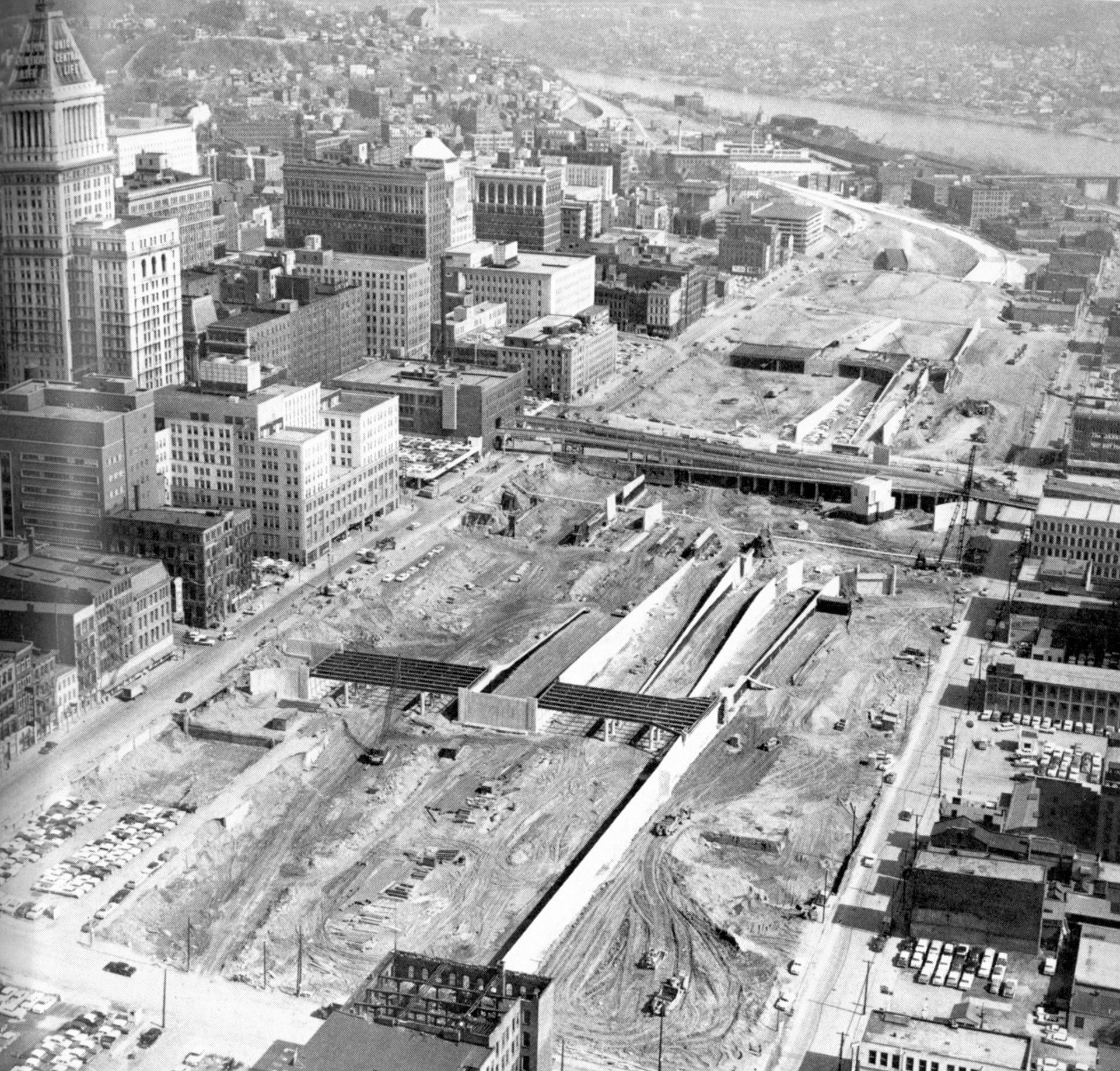
Photo Credit: FHWA
The Industry Says Yes - in 34 Days
Now watch how fast our people moved.
The bill was signed June 29. On August 2, 1956 - 34 days later - Missouri awarded the first contract under the program: $1.1 million to Koss Construction (still in business!) for 13.3 miles of 24-foot concrete pavement on US 66, the future I-44. By August 13, Missouri had crews turning dirt on US 40 - the future I-70. By September 26, Kansas was paving near Topeka, first pavement placed under interstate funding.
Bid, awarded, and building inside of six weeks. Let that one sit for a minute.
And think about what happened next inside the industry. Family grading outfits became highway contractors. Highway contractors became giants. The demand for aggregate, asphalt, concrete, iron, and people who knew how to run it reshaped everything - the specs you build to today trace straight back to what the industry had to figure out, at speed, in those first years.
The Quantity Bust of the Century
Now for the part every estimator will feel in their chest.
The bet was $25 billion and 10 years. The final tab: $129 billion and 36 years. The system wasn't declared complete until October 14, 1992, when I-70 finally opened through Glenwood Canyon, Colorado - the last 12 miles, with 40 bridges and a stack of tunnels, costing $490 million all by themselves. The hardest 12 miles in the country, saved for last.
And yet - name a better investment America has made. The interstate rewired freight, created the modern trucking industry, built the suburbs, and put a family vacation within a tank of gas of everywhere. Some busts are worth it.
Honesty requires one more paragraph: the interstate also bulldozed neighborhoods - usually the ones with the least power to object - bypassed a thousand main streets, and sparked freeway revolts in cities that still carry the scars. The bet paid off big, but not everyone got dealt in. That's part of the 70-year ledger too.
And no - there's no rule that one mile in every five is straight so planes can land on it. That one's a myth, no matter how confidently someone tells it.
Living Off the Winnings
Here's the thing about a 70-year-old highway system: it's older than most of the men and women rebuilding it.
We're not in the building era anymore. We're in the rebuilding era - every mill-and-fill, every bridge deck, every interchange in your bid schedule is America maintaining the winnings from a bet placed before your father was born.
And here's where the history stops being history: the funding model that built it all is running out of road, on a deadline.
The 1956 Act worked because the money was structural - a dedicated trust fund, a user fee, a 90/10 match no governor could refuse. Compare that to now: the IIJA - the money behind the lettings you've been feasting on - expires September 30, 2026. That's ten weeks from this email. Every surface transportation bill since 1991 has needed extensions before its successor passed, and nobody in Washington thinks this one beats the clock cleanly.
There is a bill. The BUILD America 250 Act would put $580 billion over five years into the system, and - for the first time in over 30 years - add new revenue to the Highway Trust Fund with user fees on electric and hybrid vehicles. The same user-pays logic Ike signed off on, finally updated for cars that don't buy gas. It also carries real work zone safety reforms, which regular readers know I care about. It was introduced in May. It hasn't reached the House floor. The Senate hasn't started.
This was the hot topic at the NAPA mid-year meeting, and it should be a hot topic in your office too, because it isn't abstract: it's your 2027 and 2028 backlog sitting in committee.
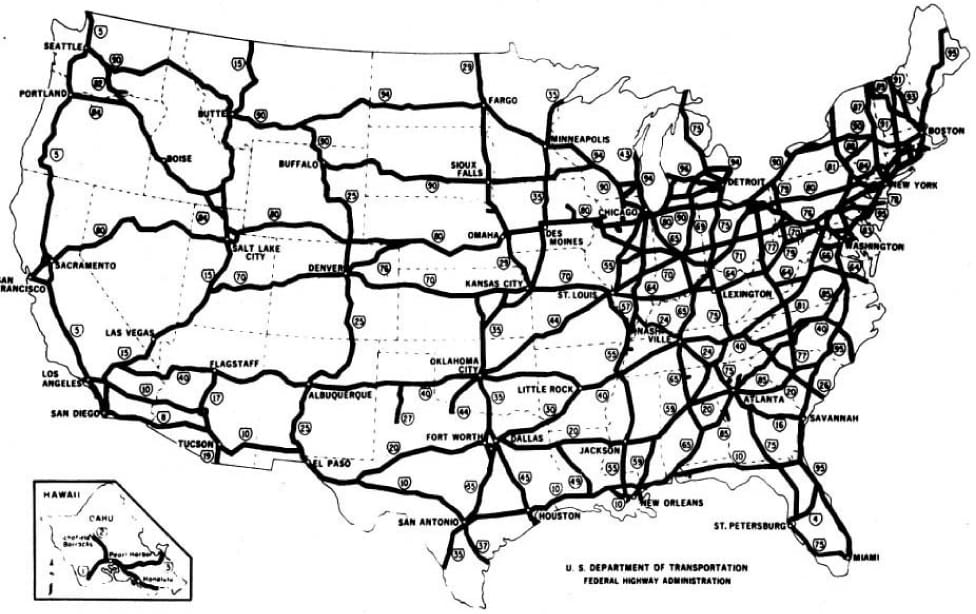
Photo Credit: Bill of Rights Institute
So here's this week's homework:
- Bookmark NAPA's Highway Bill Tracker — live status on reauthorization, in plain English.
- Know your story. Eisenhower needed a 62-day convoy to get it. Your member of Congress needs yours: jobs on the line, projects in their district, what a funding gap does to your hiring. When your state association or ARTBA asks you to make a call or host a site visit - that's the ask that moves votes. Say yes.
In 1956, an industry went from signature to pavement in 34 days. The bet's on the table again. Don't watch from the office. Not bad for a signature nobody photographed - let's earn the next one.
Thank you for reading this week!
.avif)

.svg)