.avif)
Refuse to Lower Your Standards

Tristan Wilson
Last year, I visited a construction trailer on a $300M+ interstate widening job that stopped me in my tracks.
Written on the wall, right next to the project manager's door:
"Refuse to lower your standards to accommodate those who refuse to raise theirs!"
And beside it:
Things you control: Your effort. Your beliefs. Your actions. Your attitude. Your integrity. Your thoughts. The food you eat. How kind you are. How thoughtful you are. The type of friend you are. The information you consume. The people you surround yourself with.
I posted that wall on LinkedIn and said: "You don't need fancy things. You do need a standard. Shout out to the builders doing it right." More than 250,000 people saw it. What I read on that wall left a mark on me.
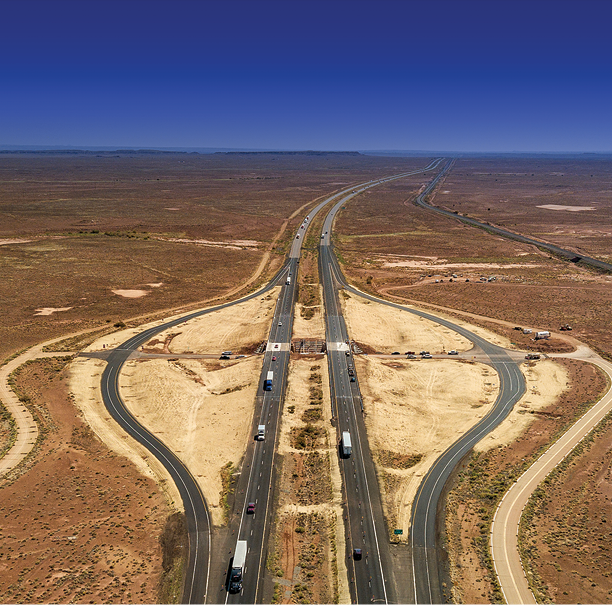
This week, I sat down with the man whose team put it there. Robert Ponton is CEO of C.R. Jackson and Satterfield Construction - building roads in the Carolinas since 1972. His team is in the middle of the largest project in company history: an 11-mile, $300M+ reconstruction and widening of I-26. That's 630,000 tons of asphalt.
We talked about how they decided to bid it, managing the owner relationship with SCDOT, leading inside a family-owned business, and why he refuses to lead from a desk. Here are my biggest takeaways.
The 15 Questions Before a $300M Bid
Here's what gets me: Robert was less than a couple of years into the job when I-26 came up for bid. Imagine being new to a company and deciding whether to take on something bigger than anything the organization had ever done. The risk involved is enormous.
So they didn't chase it on excitement. Robert's team built a one-page list of 14-15 critical criteria - management team, field expertise, subcontractor risk, cost tracking - with one rule: if even a single question couldn't be answered appropriately, right up to the moment of bid submission, they'd pull the plug. No matter how attractive the job looked. Robert put it plainly: "At no time would we take risk we couldn't manage."
That's the discipline most contractors skip. The excitement of a big job is exactly when you need a kill switch. My trip to that jobsite inspired The Big Job Playbook if you want to go deeper on this.
The Job That Transformed the Company
The I-26 job didn't just get won - it became a catalyst. They upgraded their cost tracking and analysis tools for the project, then rolled those processes out across the entire company. They intentionally staffed the job with young project engineers they could develop into future leaders.
Robert called the job "transformational," and I believe him. The best big jobs don't just make money. They make the whole company better. That's the return that never shows up in the bid.
Showing Up Every Other Monday
The executive team walks the I-26 jobsite every other Monday. Not to inspect - to remove roadblocks, debate the schedule, and make sure the team has what it needs.
I've been the PM on the other side of this. When you're running a big job far from the home office, you've got a tiger by the tail - one small issue can spiral into a major problem for the company. It's lonely. Feeling supported, and getting the right cavalry when you need it, changes everything. And the job spans four construction seasons. As Robert would tell you, it's never done until it's done. The cadence is what keeps standards from slipping over that long a haul.
Honest With the Owner, Especially When It's Hard
On a job this size, with SCDOT as the owner and a CI firm in the middle, Robert's approach is the same one his teams built long before he arrived: be honest, be straightforward, own your mistakes. They meet with the owner quarterly on the big picture and stay in constant contact with the CI firm.
There are tough conversations - they don't agree on everything. But when both parties are working toward advancing the project, you get where you need to be. Trust isn't soft stuff. On public work, it's the operating system.
Governance Is Not Management
Robert is a non-family CEO working alongside the Jackson family, who remain actively engaged in the business. His advice for anyone leading inside a family business: communication and trust, and specifically understanding what the ownership actually wants over the next three, five-plus years - not just this fiscal year.
We got into something I lived myself in my family's business: when owners are engaged in operations, they have to switch between running the business and governing it. Those are two different mental modes, and if the line between them gets blurry, things get hard. Drawing that line deliberately is some of the highest-leverage work a family business can do.
Taste the Soup
Robert walks jobsites every other Monday, visits offices, and shows up when a food truck feeds the night crews at 5 PM before their shift. His phrase: "That's where the pulse of your business is at."
Ask people in this industry how it's going and they'll tell you - sometimes with some tough medicine mixed in. You can look at all the dashboards you want, but you can't lead a business you haven't tasted. And if you've ever worked on a crew, you know the difference between the manager who rolls through without getting out of the truck and the one who parks, walks up, and shakes every hand. Making people feel seen is a superpower, and it only happens in person.
AI, Robotics, and 450,000 Missing Workers
Robert isn't in the "AI takes all the jobs" camp, and neither am I. His view: it will enhance jobs, replace some, and create others - the same pattern every technological breakthrough has followed. He expects autonomous equipment to be genuinely relevant in paving within the next five years, and sees a real opening for robotics anywhere the industry has highly repetitive tasks, starting in the shops.
What I respect about how they're approaching it: foundation first. Before integrating AI anywhere, they got their data and security structure right. And instead of trying to boil the ocean, Robert's advice to his team is to pick one place that moves the needle and start there - because that's where you'll see the wins that keep you going.
Here's the part the doomers miss. This industry is roughly 450,000 workers short right now. Efficiency gains don't eliminate work - they lower the cost of putting work in place, which makes jobs feasible that couldn't get built five years ago. Something that took 10 hours yesterday takes 10 minutes today, and that time goes back into the stuff that matters: more time in the field, more time with your crews. That's not less opportunity for contractors. It's more.
The Gales of November
I always ask guests what they're reading. Robert pointed to The Gales of November, about the sinking of the Edmund Fitzgerald. Those Great Lakes freighters were routinely loaded past their design limits because captains were incentivized to carry the most, move the fastest, and make the most trips. It worked - for years. Until it didn't.
Robert's takeaway as a leader: let standards slip gradually, long enough, and you end up in bad places. Which brings you right back to what's written on that trailer wall.
A Personal Note
Full disclosure: C.R. Jackson and Satterfield work with us at Edgevanta, and they've directly shaped our product. But that's not why Robert's on the show. He's on because he understands this business at every level - bidding, building, and especially the people side - and because getting to know the Jackson family and their teams has been one of the best parts of building this company. If you manage large, complex work, this one's for you.
Link to the full episode 🎙️:
https://www.youtube.com/watch?v=8FumJUtMr88
Resources:
.avif)

.svg)