.avif)
One Owner, Many Checks

Tristan Wilson
When I was about ten, my dad came home quiet. We were a civil and paving outfit mostly doing public work, and the company’s best estimator - sharp, careful, the person you'd trust with anything - had walked into his office in tears after a bid opening. We'd submitted the low bid on a multi-million dollar job. The number was right. The work was real. The bid got thrown out over a missing piece of paperwork.
She was devastated. Not because she did the math wrong - she didn't - but because the math never got the chance to count. One form. Look, stuff happens. But this kind of stuff is almost always preventable.
I've thought about that afternoon a lot, and it's the whole argument for what I want to talk about: redundancy - and who owns the outcome when it fails.
I've had the pleasure of watching some of the finest estimating teams in the country work. The habit the best ones share - paving, heavy civil, design-build, doesn't matter - is that they build redundancy into the process. Checks and balances, the whole way through.
On paper the job is simple:
- A bid package comes in the door.
- You analyze it, assess it, prepare the bid.
- A completed bid goes out the door.
That's the cartoon. The real version is a gauntlet of quiet, expensive places to go wrong, and the best teams have someone stationed at each one to catch the mistake before it ships. Put the whole bid on one person and you've built a single point of failure on an eight or nine figure decision.
Here's the part people get backwards. Redundancy is not the opposite of accountability. It's the wrapper around it.
The failure mode in a room full of checkers is that everyone assumes somebody else had the form. That's not redundancy - that's diffusion, and it's exactly how things slip.
So you do both: one person owns the bid, name on it, neck on the line - and a verification layer exists around that owner to catch what they miss. Not a committee that dilutes responsibility. A backstop that protects it. The owner still owns it. The team just makes sure the owner doesn't go down over one missed page. This isn't distrust. It's the opposite - you respect the work, and the person, enough to prepare for the worst.
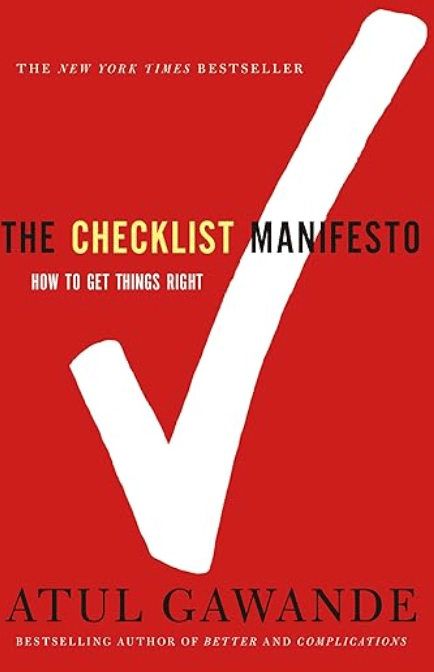
Here’s what I have seen work marvelously: Use checklists. Use paper. Use sticky notes. Whatever it freaking takes to keep from missing something. Atul Gawande's The Checklist Manifesto makes the case better than I can - surgeons and pilots, better-trained than any of us, slash their error rates with a boring list. Read it.
But here's what's actually changing, and it's bigger than the checklist.
Redundancy used to be expensive. Two estimators on every bid costs you two salaries. A full team building parallel estimates on a design-build job costs a fortune in hours. So most shops rationed it - they doubled up on the big scary jobs and ran everything else single-threaded, single point of failure and all.
That math just flipped. The checking, the cross-referencing, the scenario-running - the stuff that used to cost a second headcount - is collapsing toward free. AI extracts the quantities so nobody keys them by hand. It runs pricing analysis. It flags where this bid drifts from the last twenty. It catches the stale quantity on the revised bid form before a human ever sees it. A person still checks the work, the way they always did - there's just far less that slips through to them.
Which means redundancy stops being a luxury you ration and becomes the default on every bid. And it doesn't stop at catching errors. "Bid this one aggressively. Bid it conservatively. Bid it like conditions are perfect, off last year's productions on the same contract. Now show me all three." Multiple full scenarios, side by side, in the time it used to take to build one. That's not a someday thing - it's closer than you think.
Here is the line that does not move: a $100 million bid gets checked by a human being. Human in the loop, every time. The machine drafts, checks, and runs the scenarios. A person reads the room, makes the call, and owns the result. Leverage makes a good estimator more valuable, not less - and it makes a bad call wrong faster. The scarce thing was never the work. The machine does the work now. The scarce thing is the person whose name is on the bid.
All of it starts upstream, long before the bid review everyone pictures. A few places redundancy earns its keep:
- Finding opportunities. Multiple people, multiple sources. We're human; bids slip through. Sometimes you only hear about a job because a supplier mentions one you missed.
- Mandatory pre-bids and pre-qual. Missing a mandatory meeting is unacceptable and entirely avoidable. Get the paperwork done ahead of the date, not the morning of.
- Subs and suppliers. Get the right quotes early. Then double-check that what they sent is what you entered - watch the exclusions, confirm they're on the latest addenda, and call them before the due date.
- Addenda management. The big one. Ever been burned by a revised summary of estimated quantities on a bid form? That happens when one person tracks addenda alone. It does not happen when two do.
- Bid reviews. Async first so people show up prepared, then a real in-person sit-down. A bid review is a structured way to find the mistake before the field or accounting teams do.
- The paperwork. Bid docs and the 10-day docs. Signatures lined up early. Boring - and exactly where good bids go to die.
We look at a lot of bid tabs. What still surprises me is how often a bid dies not over price but over an error - a missing signature, a stale quantity, a form nobody double-checked. The low number was sitting right there. It just never got to count.
So: build redundancy around a single accountable owner. Trust, but verify. Hire great people, staff the team to actually run this process instead of sprinting through it, and use every proven tool you can get your hands on - because it just made checking nearly free. Then make sure a human owns the outcome.
My dad's estimator did everything right except the one thing that got checked by no one. Don't run a process that can be undone by a single missed page - especially now that you no longer have to.

.avif)

.svg)