.avif)
Grading and Earthwork Estimating Basics: How Not to Lose Money Moving Dirt

Tristan Wilson
TL;DR: Dirt gets measured three different ways, and if your estimate doesn't account for all three, you're going to buy somebody a very expensive lesson. Probably yourself.
Earthwork is where civil bids are won and lost.
Concrete has a unit price. Pipe has a unit price. But dirt? Dirt changes volume depending on where it is in the process, hides surprises below the surface, and costs whatever your haul distance says it costs.
Here's how to think about grading and earthwork estimating from the ground up.
The Three Volumes of Dirt
The same cubic yard of soil exists in three states, and they are not interchangeable.
Bank cubic yards (BCY) — soil in its natural, undisturbed state. This is what the plans measure.
Loose cubic yards (LCY) — soil after the bucket breaks it apart. Air gets between the particles and the volume expands. That's swell. This is what your trucks haul.
Compacted cubic yards (CCY) — soil after the roller gets done with it. It usually packs tighter than it sat in the bank. That's shrink. This is what the fill actually needs.
The numbers matter. For heavy soils on deep cuts and fills, published references put the range at roughly 15% shrink to 5% swell from bank to final compacted fill. And moisture moves the needle hard — a dry clay might swell around 25% when excavated, while the same clay wet can swell closer to 40%.
Miss the shrink factor on a 100,000-yard fill and you're suddenly finding 10,000 or 15,000 yards of borrow you never priced. That's not a rounding error. That's the margin on the job.
Start With the Geotech Report
The most reliable shrink and swell factors don't come from a chart in a handbook. They come from the geotechnical report for the actual site.
Compare the Proctor maximum dry density against the in-situ density and you can calculate your shrink factor instead of guessing it.
While you're in there, read for the stuff that wrecks earthwork jobs:
- Unsuitable material. Every yard of muck you excavate is also a yard of replacement fill you have to find, haul, and compact.
- Rock. Ripping versus blasting versus hammering are entirely different cost structures. Know where the rock line sits relative to your grades.
- Groundwater. Dewatering is a line item, not a surprise.
- Moisture conditioning. If the native soil is wet of optimum, you're drying it or you're lime-treating it. Either way, you're paying for it.
No geotech data? Use the middle of the standard reference ranges and carry a 10–15% volume contingency. And say so in your bid review, out loud, so everyone knows where the risk lives.
Balance the Site Before You Price It
The first real question in any grading takeoff: does the site balance?
Run your cut and fill volumes — after applying shrink and swell, not before. Three outcomes:
- Balanced site. Cut feeds fill. Cheapest dirt you'll ever move.
- Export job. Extra cut has to leave. Now you're pricing trucking and a dump site.
- Import job. You're short. Now you're pricing a borrow source, royalties, and trucking in.
Don't forget the topsoil strip. It comes off first, it can't go in structural fill, and it changes your balance before you've moved a single yard of real dirt.
Here's the thing about earthwork: the dig is rarely the expensive part. The haul is.
Moving dirt 200 feet with a dozer and moving the same dirt two miles with a truck fleet are different businesses. That's why the old-school mass haul diagram still earns its keep — it tells you what equipment the haul actually wants, and your average haul distance quietly drives more of your unit cost than almost anything else on the job.
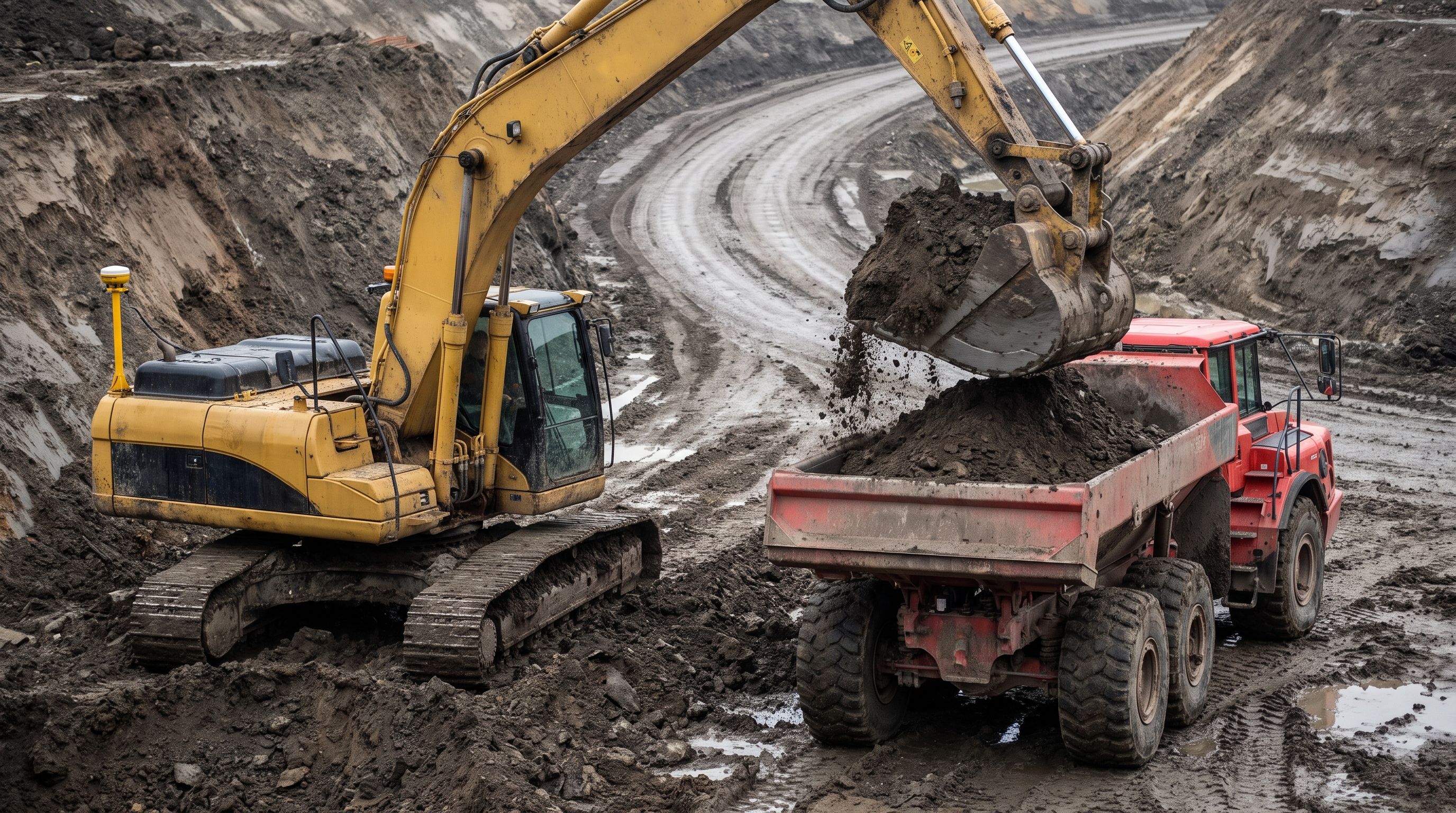
Production Rates Price the Job
Earthwork isn't priced per yard. It's priced per hour — then converted to yards.
Build the spread
Pick the crew and equipment that match the work: excavator and trucks for a long haul, scrapers where the haul and material suit them, dozer and pan for short pushes. Add the support cast — grader, water truck, compactor, grade checker or GPS base.
Do the math
Add up the hourly cost of that whole spread: ownership or rental, fuel, operators, support labor. Divide by realistic hourly production.
A spread that costs $850 an hour and moves 300 bank yards an hour is $2.83 per BCY. The same spread stuck at 150 yards an hour — undersized trucks, tight site, wet material — is $5.67. Same equipment. Double the cost.
Then cut your production number
Book production rates assume a 60-minute hour. Real jobs have shift changes, fueling, weather, waiting on trucks, and a foreman answering the phone. Estimate with realistic efficiency, and think hard about season — the same cut in February is not the same cut in August.
Five Places Earthwork Estimates Go Wrong
1. Trusting plan quantities blind. Engineer's earthwork numbers are frequently unadjusted for shrink and swell — and sometimes just wrong. Do your own takeoff. If your number and the plan number disagree, that's not a problem, that's information.
2. Applying factors in the wrong direction. Trucks haul loose yards. Fills need compacted yards. Pay-items are usually bank yards. Convert deliberately, every time.
3. Ignoring water. Wet material hauls heavier, compacts worse, and kills production. One wet season on an earthwork job teaches you more about moisture than any spec ever will.
4. Mispricing the haul. A takeoff gives you volumes. Only a haul analysis gives you cost. If you priced every yard the same regardless of where it moves from and to, you guessed.
5. Forgetting the support costs. Erosion control maintenance, haul road upkeep, dust control, dewatering, surveying and stakeout. The dirt spread gets estimated; the stuff around it gets forgotten.
The Tech Has Gotten Really Good
Two things have genuinely changed dirt work in the last few years.
Drone topo. A drone flight with RTK/PPK correction gets you accuracy in the 2–5 centimeter range, and recent industry research puts survey cost reductions at 60–80% versus traditional ground methods. Flying the site before you bid — where access allows — means you're pricing existing conditions as they are, not as the plans remember them.
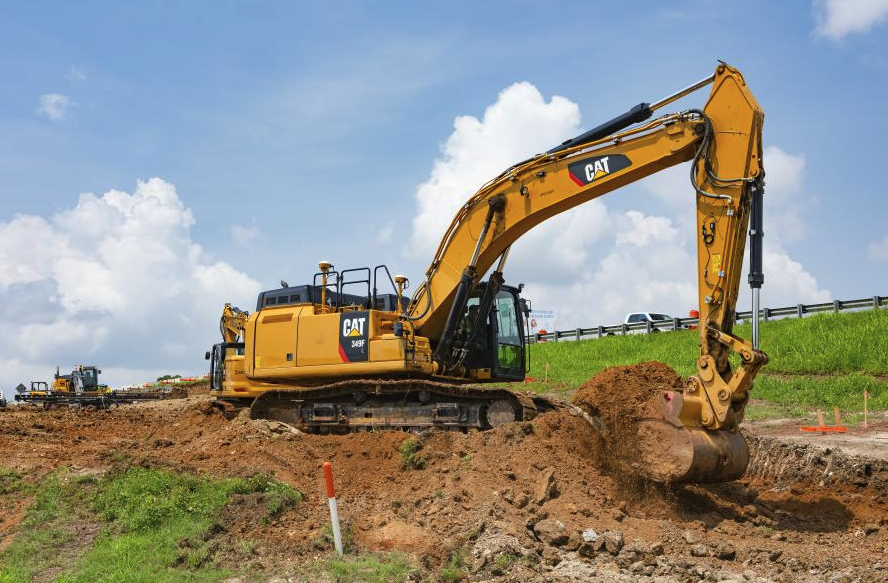
GPS machine control. Blades and buckets holding grade from a 3D model means fewer passes, less rework, and less grade-checking labor. If your production rates still assume 2015-era methods, your competitors' estimates are beating yours before the bid opens.
The same shift is happening on the estimating side. At Edgevanta, we build software that helps civil contractors find DOT lettings, dig through bid tabs, and turn estimates around faster — because the contractor who can accurately price more earthwork jobs per month wins more of them. The math of bidding is a volume game too.
Estimate the Dirt, Then Bid the Job
Everything above is estimating — figuring out what the work truly costs.
What margin to put on it, how bad you want it, what the competition's dirt spread looks like — that's bidding, and it's a separate conversation for after your costs are real. Mixing the two is how contractors talk themselves into cheap dirt that doesn't exist.
The bottom line: dirt doesn't lie, but it does change volume. Price the dirt you'll actually move — not the dirt on the plans.
.avif)

.svg)