.avif)
AI Construction Estimating Software: What It Can and Can't Do

Tristan Wilson
TL;DR: AI estimating software is very good at reading documents, counting things, and finding data. It is not good at knowing your costs, pricing your risk, or deciding which jobs you should chase. Buy it for the first list. Never outsource the second.
Every estimating tool on the market now has "AI" stamped on it somewhere.
Some of it is real. Some of it is a chatbot bolted onto software you already didn't like.
If you bid civil work — dirt, pipe, concrete, structures, roadway — here's a practical breakdown of what this stuff actually does today, and where the marketing gets ahead of reality.
What AI Estimating Software Does Well
Reading documents at scale
This is the biggest one, and it's not close.
A DOT letting comes with hundreds or thousands of pages: plans, specs, special provisions, addenda, geotech reports. Nobody reads all of it. Estimators sample; AI reads everything.
Modern AI can scan a full bid package and flag the things that hurt you: restrictive working hours, unusual liquidated damages, buried submittal deadlines, a special provision that changes how a standard item gets measured and paid.
It's not that AI reads better than your senior estimator. It's that it reads all of it, every time, without getting tired at page 400.
This is exactly why we built spec review into Edgevanta — the misses that cost real money are almost never on page one.
Takeoff and counting
Computer vision has gotten legitimately good at quantities. Vendors and industry guides report takeoff time cut dramatically — some claim 70–90% — with accuracy above 95% on clean, well-documented plan sets.
Two caveats for civil contractors:
First, those accuracy numbers come from clean drawings. A crisp commercial plan set is one thing. A scanned county road plan from a 30-year-old file, or earthwork that needs surface modeling, is another. Complex or messy inputs still drag accuracy down, and every honest vendor will admit it.
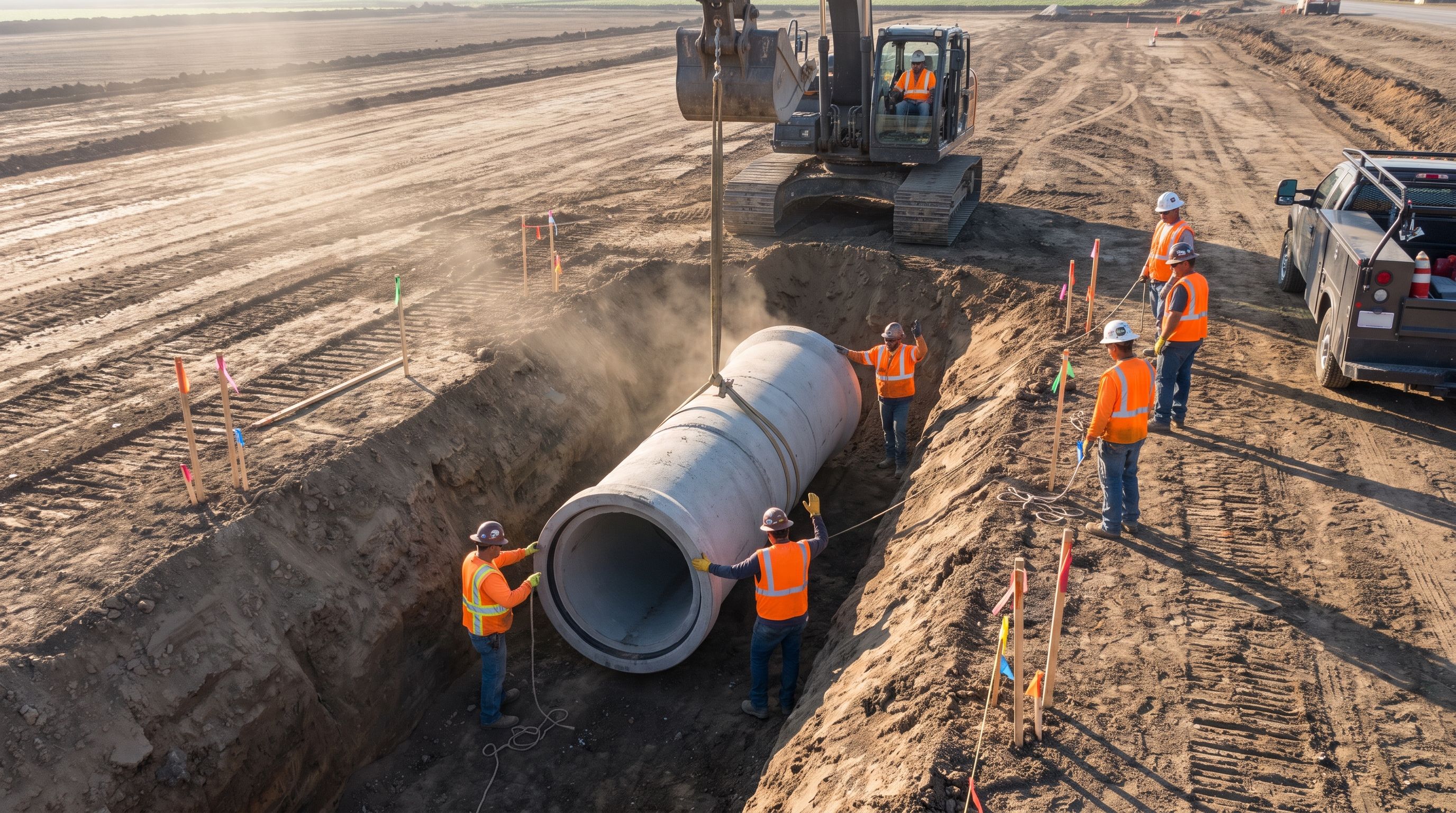
Second, a quantity is not an estimate. Knowing you have 4,200 LF of 24-inch RCP tells you nothing about what it costs your crew to lay it through rock, in traffic, at that depth.
Bid discovery and historical data
AI is very good at watching every DOT letting schedule, plan room, and bid board so you don't have to. It can also chew through years of bid tabs and tell you how a competitor has been pricing an item — homework that used to take an afternoon now takes seconds.
That's finding the opportunity and framing the market. Both valuable. Neither is pricing the work.
Killing data entry
Less glamorous, just as real: setting up a bid used to mean re-typing hundreds of pay items, quantities, and units from a DOT proposal into your estimating system.
AI-era tools import that structure directly and set the estimate up in minutes. Estimators consistently say this is the win they feel first — not some moonshot prediction feature, but hours of typing that simply disappeared.
If your estimators are still keying in bid items by hand in 2026, that's the first thing to fix. It's also the cheapest.
What AI Estimating Software Can't Do
It doesn't know your costs
No model knows what your 60-person paving-and-grading outfit can produce on a Tuesday in August with your foreman running the crew.
Your production rates come from your history, your people, your equipment, your dirt. AI can help you organize that history and surface it faster. It cannot invent it. If your cost data is garbage, AI will just deliver garbage faster.
It can't make the bid/no-bid call
Whether to chase a job depends on your backlog, your crews, your appetite for that owner, and what else is letting next month. That's strategy. The industry guides all land in the same place: the tools focus on quantities and documents, not bidding strategy or margin.
Estimating is figuring out what the work costs you. Bidding is deciding what it's worth. AI helps a lot with the first. The second is still yours.
It won't price risk
Winter work. A litigious owner. A utility conflict the plans pretend doesn't exist. An item you know will overrun.
AI can flag some of these. It cannot decide how much contingency to carry or where to put money in a unit price bid. That judgment — built on jobs that went sideways — is the most valuable thing in your estimating department, and it doesn't live in a model.
So Is It Worth Buying?
Yes — if you buy it for the right job.
Adoption is telling you something. Industry surveys put AI use in construction estimating at roughly double what it was two years ago — from around 19% of contractors to closer to 38% — and among the largest GCs it's already the majority.
Here's the thing: your competitors who adopt this aren't replacing estimators. They're giving each estimator more hours. Fewer hours re-typing bid items and hunting through specs; more hours on production rates, site visits, and bid strategy.
That's the whole play. The winners won't be the contractors with the fanciest AI. They'll be the ones whose estimators spend the most time on judgment because software absorbed the grunt work.
What This Looks Like on a Real Bid
Take a typical DOT letting.
Monday: AI flags the project the day it's advertised, pulls the proposal, and sets up the bid items. Your estimator reviews the bid package completely and the AI's spec summary — working restrictions, DBE goal, unusual provisions — instead of skimming 800 pages and hoping.
Midweek: Takeoff tools handle the counting and measuring. Your estimator spends the time where it pays: site visit, utility conflicts, haul routes, production rates, sub and supplier calls.
Bid day: Historical bid tabs and competitor pricing are already on the table. The margin conversation happens with real data — but it's still a conversation, between people who know the company's backlog and risk appetite.
Nothing in that workflow removed the estimator. Everything in it removed the part of the job that was never really estimating.
Questions to Ask Any AI Estimating Vendor
"Show me on my plans, not your demo." Every demo is clean. Your plans aren't. Make them run a real letting you just bid.
"What happens when it's wrong?" You want confidence scores and easy verification, not a black box. If you can't check the output quickly, you'll either trust it blindly (dangerous) or re-do everything (pointless).
"Does it know civil work?" A tool trained on commercial interiors doesn't understand pay items, unit price bidding, DOT specs, or earthwork balance. Ask specifically about heavy civil.
"Where does my data go?" Your cost history and bid strategy are your competitive edge. Understand what's used to train what.
"What does integration actually look like?" Integration gaps are the most common reason these tools end up as shelfware. If it doesn't fit how your estimate gets built today, it won't get used in March when you're bidding three lettings a week.
The Bottom Line
AI construction estimating software is a power tool, not a replacement estimator.
It reads everything, counts fast, and never misses a letting. It doesn't know your costs, your crews, or your appetite for risk.
Let AI do the reading. You do the judging.
The contractors who get that split right are going to be very hard to bid against.
We value your feedback, so please leave a rating below to help us improve. Thanks for reading!
.avif)

.svg)